
Pennsylvania Septic System Maintenance Inspection and Pumping Requirements for Homeowners
A septic problem rarely starts with sewage in the yard. More often, it starts quietly: a tank that has not been pumped, a leaking fixture that overloads the system, a drain field compacted by vehicles, or a home sale where nobody checked the local rules until the last minute.
For Pennsylvania homeowners, septic care is part routine maintenance and part local compliance. The basic system is simple, but the rules around inspection and pumping can vary by township, borough, county, lender, and sales contract.
This guide explains how a residential septic system works, what maintenance matters most, when pumping is needed, what inspections look for, and what buyers and sellers in Pennsylvania should confirm before closing.

How a home septic system works
A home septic system treats wastewater on the property instead of sending it to a public sewer. Every toilet, shower, sink, dishwasher, and washing machine drains into the system.
Most systems have three main parts:
The septic tank
Wastewater enters the tank first. Solids settle to the bottom as sludge. Grease, oils, and lighter material float to the top as scum. Liquid wastewater exits the tank.
The distribution system
The liquid, called effluent, moves from the tank to a drain field, sand mound, seepage bed, or another approved absorption area.
The soil treatment area
The soil filters and treats the effluent before it returns to the groundwater system.
A Septic System is not designed to make solids disappear. The tank holds them until they are removed by a licensed hauler. If solids leave the tank and reach the drain field, they can clog the soil and shorten the life of the entire system.
That is why pumping matters. It protects the most expensive and hardest-to-replace part of the system, the absorption area.
Routine maintenance that protects the system
Good septic maintenance is mostly about keeping the system balanced. Too much water, the wrong waste, or physical damage to the drain field can cause problems even when the tank itself is sound.
Use water carefully
Septic systems need time to separate solids from liquids. Heavy water use can push wastewater through the tank too quickly.
Spread out laundry loads through the week instead of doing many loads in one day. Fix running toilets and dripping faucets quickly. A single running toilet can send a steady flow of water into the system for days.
High-efficiency fixtures can help, but habits still matter. The goal is not to avoid using water. The goal is to avoid sudden overloads.
Keep solids and grease out
A septic tank is not a trash can. Put only human waste and toilet paper down the toilet.
Avoid flushing:
Wipes, even those labeled flushable
Paper towels and tissues
Feminine hygiene products
Dental floss
Cotton swabs
Cat litter
Cigarette butts
Medications
Paint, solvents, or household chemicals
Grease is another common problem. Hot grease may go down the drain as liquid, but it cools and hardens inside pipes or the tank. Scrape pans into the trash before washing them.
Protect the drain field
The drain field needs open, uncompacted soil. Heavy weight can crush pipes or compact the soil so it no longer absorbs water well.
Keep these away from the drain field:
Cars and trucks
RVs and trailers
Sheds and patios
Pools
Livestock
Large trees or deep-rooted plantings
Grass is usually the best cover. It helps control erosion without sending aggressive roots into the system.
Know the warning signs
Call a septic professional if any of these appear:
Slow drains throughout the house
Gurgling toilets or drains
Sewage odors inside or outside
Wet or spongy soil over the drain field
Bright green grass in one area of the yard
Sewage backing up into tubs, toilets, or floor drains
Alarm sounding on a pump tank or advanced treatment unit
A backup is not the first stage of failure. It is often the point where a problem has already become serious.

When the system should be pumped
The common pumping interval for many homes is every few years, but no single schedule fits every property. Tank size, household size, water use, garbage disposal use, and the amount of solids entering the system all affect timing.
A household with two people and a large tank may go longer between pump-outs. A large household with a smaller tank may need service more often. Homes with garbage disposals often build up solids faster.
The most reliable way to decide is to measure sludge and scum levels during inspection. A septic professional can tell whether the tank still has enough working capacity or needs pumping soon.
A practical way to think about septic maintenance, when to pump a septic system and when to inspect it, is to treat pumping as prevention, not emergency service.
Situation | Pumping guidance |
Average full-time household | Often every 3 to 5 years, depending on tank size and use |
Large household or frequent guests | May need more frequent pumping |
Garbage disposal used often | Solids can build faster, so inspect and pump sooner |
Home vacant or lightly used | May still need inspection, but pumping depends on measured solids |
Unknown service history | Schedule an inspection and be prepared to pump |
Before a real estate sale | Check local and contract requirements before ordering service |
Pumping too rarely can damage the drain field. Pumping too often is usually unnecessary, unless a local ordinance, lender, or inspection finding requires it.
One caution for home sales: do not automatically pump the tank right before an inspection unless the inspector, municipality, or contract requires it. Some inspection methods rely on observing operating levels and flow conditions. In other cases, the inspector may want the tank pumped during the inspection so the tank structure can be checked. Ask first so the work happens in the right order.
What a septic inspection includes
A septic inspection is more than opening a lid and taking a quick look. The depth and scope can vary, especially in real estate transactions, but a good inspection should answer a few basic questions.
Is wastewater moving through the system correctly? Is the tank structurally sound? Are baffles or tees in place? Is the drain field showing signs of failure? Is the system matched to the home and approved use?
A septic inspection may include:
Locating the tank, distribution box, pump tank, and drain field
Checking maintenance records and permits, if available
Opening accessible lids
Measuring sludge and scum levels
Evaluating inlet and outlet baffles
Looking for cracks, leaks, corrosion, or unsafe covers
Checking pumps, floats, alarms, and electrical components where present
Running water to observe flow
Looking for sewage surfacing or saturated soil
Reviewing whether the system appears adequate for the home
Some systems need special attention. Pennsylvania has many properties with sand mounds, elevated beds, older seepage pits, holding tanks, and advanced treatment components. A mound system, for example, may include pumps and alarms that need regular checks.
A septic inspection is a snapshot of current condition. It can identify visible defects and risk factors, but it cannot guarantee how long a system will last.
Ask for a written report. It should describe what was inspected, what could not be inspected, visible defects, recommended repairs, and whether pumping is needed.

Pennsylvania rules for buyers and sellers
Pennsylvania does not have one simple statewide rule that says every septic system must be pumped and inspected before every home sale. The state regulates sewage planning and on-lot sewage systems, largely through the Pennsylvania Sewage Facilities Act, often called Act 537, and related Department of Environmental Protection oversight. Local governments play a major role.
That means the exact requirements are often local.
A township, borough, county health department, or other local agency may require inspection, pumping, permits, repairs, or proof of maintenance. Some municipalities have on-lot sewage management programs that require routine pumping on a set schedule. Others require an inspection at property transfer. Some require both.
For a Pennsylvania sale, the buyer and seller should confirm several things early.
Check the local municipality
Call the township or borough where the property is located and ask about on-lot sewage requirements for transfer of property.
Ask specifically:
Does the municipality require a septic inspection before sale?
Does it require pumping before settlement?
Must the pumping or inspection be done by an approved provider?
Is there a municipal form or certificate?
Are there required timelines before closing?
Are past pumping records needed?
Is a Sewage Enforcement Officer involved?
Are repairs or permits required before transfer if defects are found?
Do not assume the rule in one Pennsylvania municipality applies in the next one. Neighboring townships can have different ordinances.
Review the agreement of sale
Even if local law does not require a septic inspection, the real estate contract may. Buyers often make the sale contingent on a satisfactory septic inspection. The agreement may identify who pays, when the inspection must happen, and what happens if the system fails.
The contract can also require pumping. If so, follow the contract language carefully. Pumping before the inspection, after the inspection, or during the inspection can lead to different results.
Expect lender and loan program requirements
A lender may require a septic inspection if there are visible concerns, property condition issues, or loan program rules. Government-backed loans may require the septic system to be functional and sanitary, and the lender may ask for documentation if there are signs of trouble.
The appraiser is not a septic inspector. If the appraiser notes odors, surfacing sewage, or obvious defects, the lender may require further evaluation.
Understand what happens if the system fails
If an inspection finds a malfunction, Pennsylvania local officials may need to be involved. Repairs, replacements, or new absorption areas often require permits and review by a Sewage Enforcement Officer.
A failed system can delay closing. It can also affect financing, sale price, escrow negotiations, and occupancy. In some cases, the parties may agree on repairs before closing. In others, they may negotiate credits or escrows if allowed by the lender and local authority.
This article is informational only and is not legal advice. For a specific sale, confirm requirements with the local municipality, the county or local health authority if applicable, the Sewage Enforcement Officer, the real estate professionals, and the lender.
Records every homeowner should keep
Septic records are easy to lose, especially in older homes. Good records make maintenance easier and can help during a future sale.
Keep copies of:
Original permit and design documents, if available
Plot plan showing the tank and drain field
Pumping receipts
Inspection reports
Repair invoices
Pump, alarm, or electrical service records
Municipal notices or compliance forms
Water test results if tied to a real estate or lending requirement
If the system location is unknown, have it located before there is a problem. Mark the tank access points and drain field on a simple property sketch. Photos can help too, especially if taken with landmarks in view.
Accessible risers are worth considering if the tank lids are buried. They reduce digging, make routine service easier, and encourage regular inspections. Lids must be secure to prevent falls or unauthorized access, especially around children and pets.
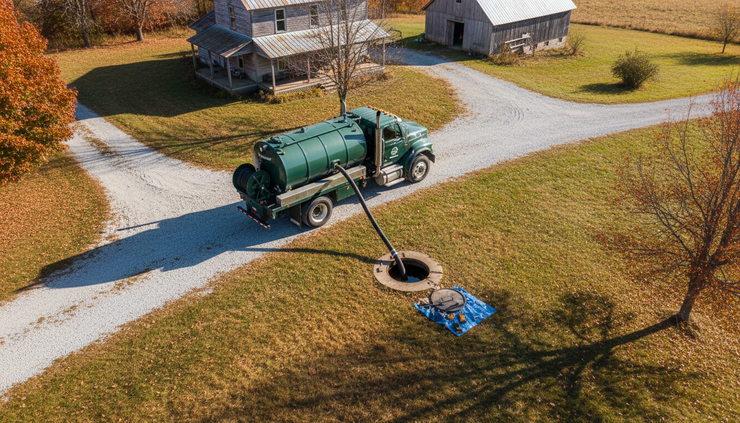
A simple homeowner schedule
A written schedule prevents guesswork. It also helps catch small issues while they are still manageable.
Use this as a starting point:
Task | Suggested timing |
Review water use and fix leaks | Ongoing |
Keep vehicles and structures off the drain field | Ongoing |
Inspect visible lids and alarms | A few times per year |
Professional inspection | Every 1 to 3 years, depending on system type and local rules |
Pump the tank | Based on inspection, often every 3 to 5 years |
Service pumps or advanced treatment units | As recommended by the manufacturer, service provider, or municipality |
Confirm local rules before listing or buying | Before signing or early in the contract period |
Advanced treatment units, sand mounds, and systems with pumps may need more frequent service than a simple gravity system. Follow the operation and maintenance plan for the specific system.
For seasonal homes, do not ignore the system just because use is limited. Long idle periods, power interruptions, roots, damaged lids, and missing records can still create problems.
The best time to deal with septic questions is before pressure builds
A well-maintained septic system can serve a home for many years, but it needs routine attention. Know where the components are, keep harmful materials out, protect the drain field, inspect regularly, and pump before solids threaten the absorption area.
For Pennsylvania buyers and sellers, the biggest mistake is waiting until the week before closing to ask about local requirements. There may be no single statewide transfer rule, but local ordinances, contract terms, lenders, and Sewage Enforcement Officers can all affect what must happen before settlement.
Start with the municipality. Get the inspection and pumping requirements in writing when possible. Then schedule qualified professionals in the right order. That one step can prevent delays, surprise costs, and avoidable septic failures.


Comments